
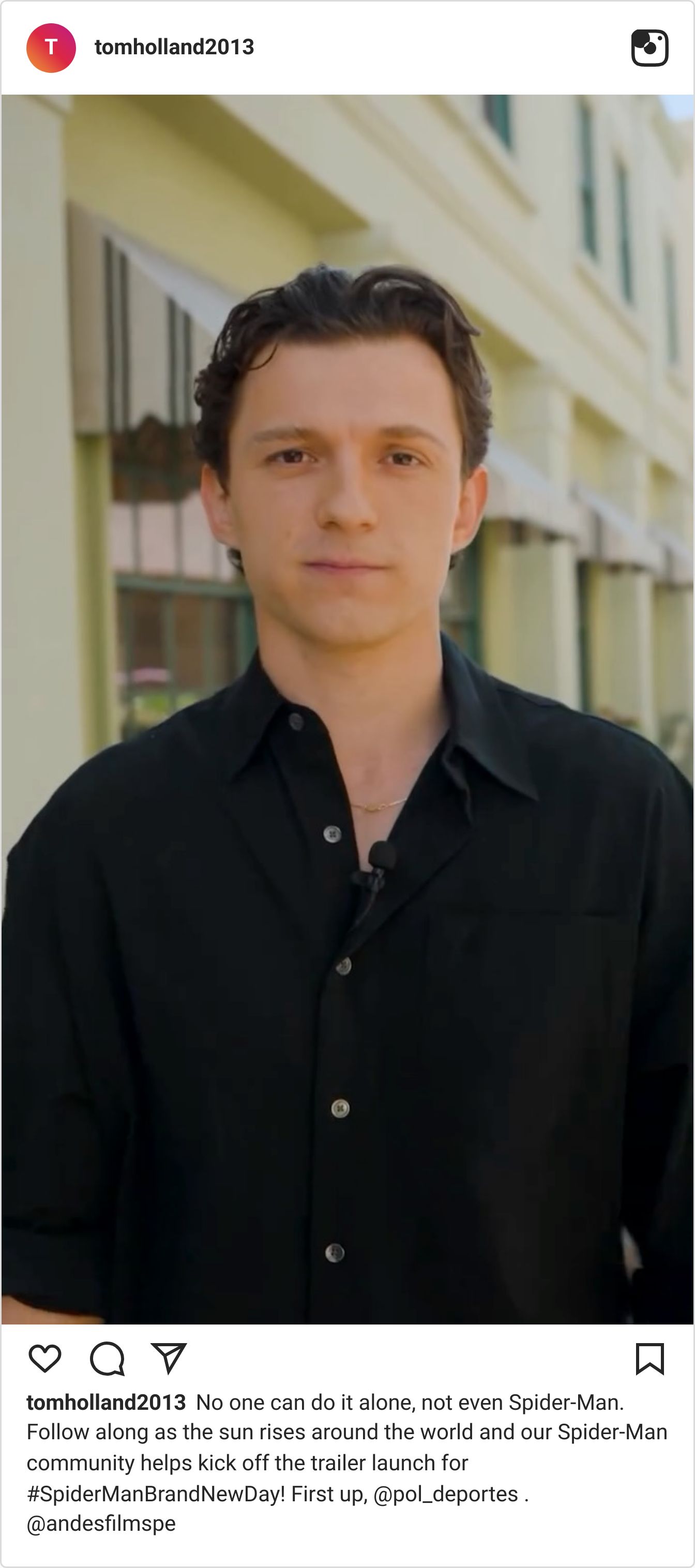
On March 17, 2026, Tom Holland posted a message: the Spider-Man: Brand New Day trailer would drop the following morning, but throughout the day, one-second clips would release on various social media accounts, giving brief glimpses before the full trailer arrived.
The strategy was unusual enough that it generated its own press cycle, a meta-campaign about a campaign. The following morning, the full trailer posted. Within eight hours it had 373 million views, breaking the 24-hour record held by Deadpool & Wolverine (365 million) before the day was out. It hit 718.6 million views in 24 hours. In four days, it crossed one billion: the first film trailer in history to do so.
The Brand New Day trailer is simultaneously the most instructive and least replicable campaign event of 2026. Instructive because it contains three distinct strategic decisions that any studio can analyze. Least replicable because two of those decisions required a four-year absence of the world's most popular superhero franchise and a $309 million promotional campaign. The third, however, is applicable everywhere.
What the one-second clip strategy actually did
The day-before drip of one-second clips from the Brand New Day trailer is the decision most studios are wrong to dismiss as an IP-specific stunt. The clips were not teasers of the film; they were teasers of the trailer itself. They transformed the trailer release from an event that audiences would scroll past into an event that audiences were waiting for, checking social media to catch the next clip before the full version dropped.
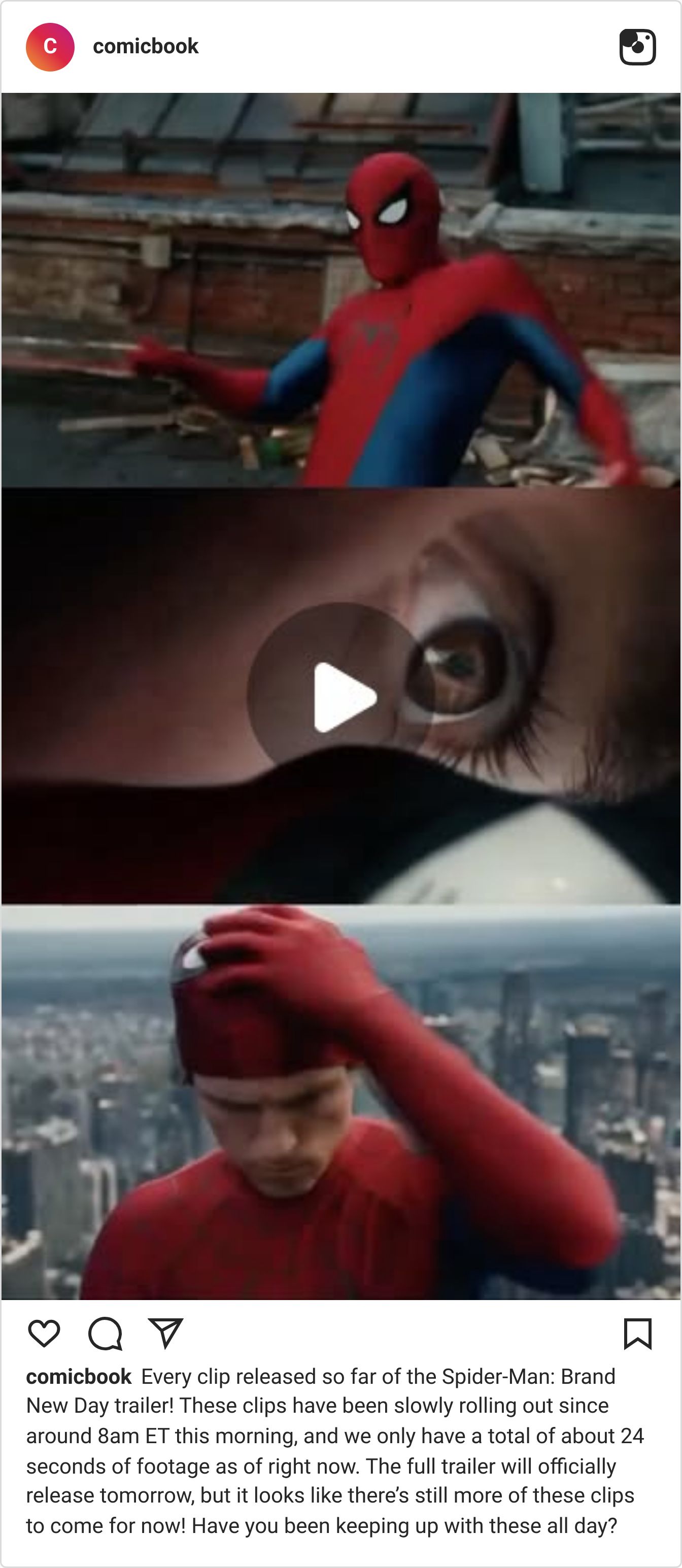
This is a sequencing insight, not an IP insight. The one-second clip approach converts a passive audience into an active one in the 24 hours before the full trailer drops. The audience who has already sought out and watched six one-second clips is not the same audience as the one who encounters a cold trailer in their feed; they are primed, they are actively engaged, and they are more likely to watch the full trailer to completion rather than scrolling past after five seconds. For a franchise with Tom Holland's parasocial following, the effect was massive. For a smaller film, the same mechanic works at smaller scale: the audience that has been dripped a clip the day before is more prepared to engage with the full trailer than an audience that encounters it cold.
What the withholding strategy did for Brand New Day specifically
The Brand New Day trailer withheld almost all plot information. It established that four years have passed since No Way Home, that Peter Parker is living alone and has been erased from the memories of everyone he loves, and that something threatening is coming. It did not show the villain. It did not reveal the new supporting cast's role. It did not explain the premise of the film's conflict. For most films, this level of withholding would be a campaign liability; audiences cannot develop want-to-see for a film they cannot understand. For Brand New Day, the withholding worked because the audience's existing relationship with Tom Holland's Peter Parker filled the gap. You do not need to understand the film's premise if you already care deeply about the character.
The trailer record is partly a measurement of that pre-existing investment. The 718.6 million 24-hour views are not all viewers who were persuaded by the trailer's content. Many of them are Spider-Man fans who would have watched a title card and nothing else. The instructive question for studios is not "how do I make a trailer that gets a billion views" but "what is the pre-existing community investment in my film's world, and how does my trailer strategy serve that community rather than manufacture attention from scratch."

What trailer strategy actually looks like for films without IP pre-investment
The Brand New Day record obscures a more useful set of questions about what trailer strategy should look like for films that are not MCU tentpoles. Summer 2026 provided several instructive counterexamples. The Odyssey used the trailer as a format argument: the footage was shot entirely on new IMAX 70mm cameras, and the trailer was designed to communicate that what you were seeing was genuinely impossible to replicate on any other screen. The Obsession trailer (which Focus Features posted natively to Letterboxd rather than linking from YouTube) used platform-specific distribution to reach the exact audience most likely to act on it.
Summer 2026 produced several examples worth building from. The Brand New Day one-second clip drip is the clearest: releasing fragments the day before the full trailer converted a passive audience into an active one, so the trailer arrived into an environment already primed rather than landing cold. The Odyssey used the trailer as a format argument: every shot communicated something genuinely impossible to replicate outside a theater -- which means the trailer was doing different work than awareness. It was making the theatrical necessity case before the film had opened, and Obsession's Focus Features team posted the trailer natively to Letterboxd as a Story rather than linking from YouTube, which is a small distribution decision with a meaningful effect: a native post reaches users inside the platform's discovery feed in a context where they are already thinking about what to watch, rather than interrupting them somewhere else.
Three principles emerge from those examples that apply regardless of budget:
Design one frame to travel independently. The trailer that contains a single shot composted for screenshotting, clear at thumbnail size, and genuinely worth posting gets a second wave of reach the trailer itself does not generate. This requires the editor and the marketing team to agree in advance on which frame it is.
Distribute natively, not just by link. A trailer posted as a native Story on Letterboxd, a native video on TikTok, or a native reel on Instagram performs differently from a YouTube link pasted into the same platforms. The audience that encounters it natively is already in a discovery mindset.
Make the trailer an event the audience waits for, not content they encounter cold. A first-look still, a teaser of the teaser, or a day-before drip of fragments all serve the same function: they turn the trailer drop from a passive distribution event into something the audience is actively anticipating.
The sequencing question most studios still get wrong
The standard trailer sequencing (teaser at 6-12 months, trailer at (3-4 months 3-4 months, final trailer weeks out) has not fundamentally changed since the DVD era, and it is showing its age. The audience that discovers a film via TikTok or Letterboxd in the week before release is not on the same discovery schedule as the audience that plans theatrical visits months in advance. The teaser-to-trailer sequencing was built for an era when film discovery happened through broadcast media on a predictable calendar. The audience that is actually driving opening-weekend conversions in 2026 is making decisions in the 72 hours before the screening.

That gap between the campaign's sequencing assumption and the actual purchase behavior means studios are spending a significant portion of their trailer budget on awareness at times when the audience that will actually see the film opening weekend has not yet started making their decision. The films that are getting this right are building final-week trailer content specifically designed for the social media environment of the 72-hour decision window: shorter cuts, platform-specific versions, and reaction-friendly moments, rather than simply recycling the theatrical trailer for one more week of social spend.
Movie marketing intel: This week in trends
CAMPAIGN STRATEGY 📋 The Spider-Man: Brand New Day promotional campaign hit $309 million, a Hollywood marketing spend record; its social media universe reach of 2.86 billion was the highest ever recorded (Deadline / RelishMix) Deadline reported in July that the Brand New Day promotional campaign hit $309 million, with RelishMix recording a 2.86 billion social media universe reach across TikTok, YouTube, Facebook, X, and Instagram, an all-time record 3.2x above 26 different superhero genre norms. The cast's own social power was a significant factor: Zendaya at 216 million fans, Tom Holland at 70 million followers. The $309 million figure matters because it reframes what the trailer record actually represents: not a cost-free organic phenomenon but a heavily coordinated and extremely expensive amplification of a campaign moment that would have performed regardless.
EXHIBITION 🎬 TIFF 2026 closed with The Social Reckoning (Sorkin, Jeremy Strong) as the early Oscar frontrunner; the awards campaign machine is already running (Variety / IndieWire) The Social Reckoning premiered to a standing ovation at TIFF and is now the early Best Picture frontrunner per awards tracking. Aaron Sorkin's courtroom drama about the first major AI liability trial, starring Jeremy Strong, landed with critics in exactly the way a TIFF awards-season premiere is supposed to: a sustained standing ovation, rapturous reviews, and immediate Oscar conversation. For studios with fall prestige releases, the TIFF premiere is not just a festival appearance; it is the opening beat of an awards campaign that runs through March, and The Social Reckoning's landing is the benchmark every other fall release is now competing against.
This week's movie review: Fall 2: Deadpoint ★★★ (3/5)
The Spierig Brothers understand the assignment: make you feel the height. Thailand's Mount Kwan is a more interesting location than a TV tower in the desert, and Slater and Thomas carry the human stakes. The third act reaches for an emotional conclusion the film hasn't quite earned.
